
Products
HAZX
Point of Contact
Chris Wacek
571.260.0828
Cwacek@dcscorp.com
HAZX provides an intuitive, risk‑based assessment tool that evaluates explosive and hazardous material risks for launch facilities supporting next‑generation vehicles and other sites with challenging safety containment requirements, enabling safe, defensible siting decisions when traditional quantity‑distance methods fall short.





Advantages
Risk‑Based Hazard Analysis for Modern Launch Operations
Risk‑based explosive hazard assessment that augments and, when needed, replaces rigid quantity‑distance siting rules with defensible, scenario‑specific analysis.
Support for complex launch environments, enabling safe siting decisions for next‑generation LOX‑Methane and LOX/RP‑1 vehicles.
Comprehensive toxic material risk evaluation covering storage, transport, and handling workflows in modern aerospace and installation settings.
Flexible modeling and visualization tools that allow planners to compare hazard profiles, assess trade‑offs, and coordinate decisions across diverse engineering and safety stakeholders.

Product snapshot
The HAZX tool enables risk-based assessment in addition to standard quantity-distance siting evaluations. For complex situations where rigid guidelines result in violations. HAZX also supports evaluation of the risks associated with storage, transportation, and handling of toxic materials. HAZX has supported the siting of facilities that involve newer and larger LOX-Methane (LOX/LNG) vehicles with large LOX/RP1 vehicles . We have worked closely with the Space Force to demonstrate how HAZX can help enable hosting these larger vehicles at Cape Canaveral and Vandenberg Space Force bases.
Frequently Asked Questions
HAZX streamlines hazard‑evaluation workflows by giving mission planners and safety teams a unified environment for assessing explosive and material‑handling risks. It reduces reliance on fragmented tools and manual calculations, helping organizations approach complex hazard scenarios with clearer, data‑supported insight.
HAZX blends technical modeling with intuitive visualization so users can compare hazard profiles, evaluate trade‑offs, and understand the implications of different siting or operational choices. Its flexibility supports missions where environmental constraints, mission tempo, or platform size require rapid and defensible assessment.
Rather than limiting evaluations to fixed rulesets, HAZX integrates broader operational context and risk‑based considerations. This allows teams to explore alternative safety postures, adapt to evolving mission architectures, and justify decisions with reproducible, technically grounded analyses.
Yes. HAZX provides a common analytical framework that helps engineers, safety officers, program managers, and installation officials work from the same hazard picture. Shared outputs and standardized assessments reduce misunderstanding and help accelerate review cycles across multi‑organization efforts.
HAZX’s adaptable architecture allows analysts to incorporate new platform dimensions, propellant combinations, and operational concepts without waiting for tool redesign. As mission systems evolve, HAZX can scale to accommodate updated hazard models, unique configuration features, or novel operational envelopes.
HAZX can integrate structural layouts, operational constraints, equipment footprints, material inventories, and other mission‑relevant datasets to produce tailored hazard evaluations. This flexibility ensures assessments account for the specific configuration and workflow of each site or mission phase.
HAZX helps planners compare multiple siting strategies, evaluate future expansion paths, and anticipate how changes in mission scale may affect hazard relationships. Its analytical outputs provide a forward‑looking foundation for designing facilities, adapting infrastructure, and supporting modernization across mission locations.
Explore more products
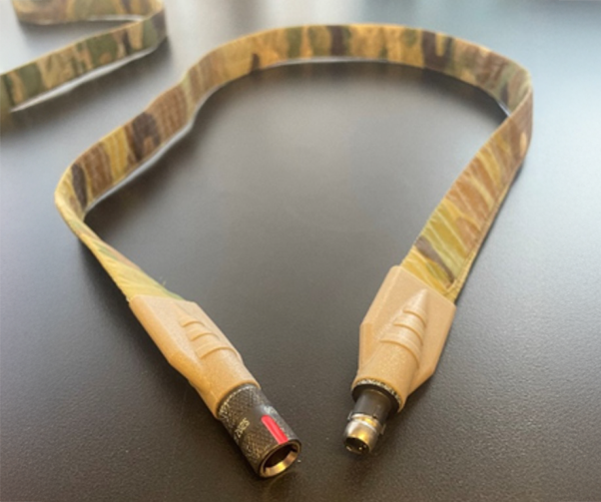

CROW
CROW provides fast, deployable electronic warfare with accelerated signal processing, machine‑learning insights, and agile mission support.
MORE INFORMATIONARVA
Lorem ipsum dolor sit amet, consectetur adipiscing elit, sed do eiusmod tempor incididunt ut labore et dolore magna aliqua. Ut enim ad minim veniam, quis.
MORE INFORMATIONGET IN TOUCH
WE TAKE IT ON

When the mission demands a partner who understands the platform, the pace, and the responsibility—DCS is ready, and more often than not, we are already there. Connect with our team to discuss your challenges, explore partnering opportunities, or learn how DCS delivers trusted solutions. Reach out today and let’s take it on together.
START A CONVERSATION