
Products
AFSIM
Point of Contact
Jeremy Geaslen
937.358.7235
jgeaslen@dcscorp.com
DCS produces broadly reaching scenarios derived from intelligence sourced data combined with representations of present day to cutting edge future concepts. These concepts are portrayed with a wide array of behaviors, responses, and orders of battle to fulfill AFSIM modeling requirements for the evolving battlefield reaching beyond a single scope of effectiveness and into multi-domain coordinated capabilities.





Advantages
Powering Realistic, Multi‑Domain Simulation for Modern Warfare
Government-owned framework with source available to all US Government agencies and eligible DOW industry partners, supporting multi-domain operations from subsurface to space.
Modern C++ architecture with modular components, plug‑in API, and flexible agent modeling.
Script‑driven behaviors, tactics, and scenario control enabling analysts to tailor simulations without changing C++ code.
Realistic perception modeling with tracking, correlation, fusion, fog‑of‑war, and domain‑specific “box‑set” scenarios.

AFSIm
DCS supports AFSIM, a government‑owned, community‑informed military simulation framework designed as part of a shared digital commons across DOW EMS&A. AFSIM, including full source code and documentation, is provided to all U.S. Government agencies through a Memorandum of Understanding (MOU) and to eligible industry partners through an Information Transfer Agreement (ITA). Built to meet the needs of a rapidly evolving defense environment, AFSIM delivers multi‑domain capabilities from sub‑surface to space, including dedicated modeling for electronic warfare (EW) and cyber operations. Its powerful multi‑resolution modeling approach allows analysts to move seamlessly between detailed physics‑based effects and higher‑level operational representations. At its core, AFSIM is engineered on a modern C++ framework of simulation building blocks, using object‑oriented design and a flexible plug‑in API to ensure extensibility and long‑term adaptability.
A key strength of AFSIM is the way it empowers analysts. A Python‑like scripting language makes it possible to construct scenarios and customize simulation control without modifying C++ code, while script‑based definitions of behaviors, tactics, and command structures shift creation responsibility from software developers directly to the analyst. The system’s flexible agent‑modeling architecture enables realistic tactical behavior representation, and its component‑based architecture supports modular integration of sensors, movers, and weapons. AFSIM also incorporates realistic perception‑based system modeling, including tracking, correlation, and fusion algorithms, enabling robust fog‑of‑war representation essential for operational realism.
Why choose DCS for AFSIM training?
DCS employees have supported the development of AFSIM since its earliest days, bringing more than 10 years of hands-on experience to the table. Our instructors pair their deep understanding of AFSIM’s capabilities with real application insights, working side by side with our developers to refine both the tool and its training with every new release. Backed by a team of numerous highly qualified expert trainers, we’re ready to meet your scheduling needs—whether that means hosting sessions at our Dayton location, traveling to your facility, or delivering virtual training through Microsoft Teams. With thousands of hours of combined instruction and a history of providing training to countless domestic and international companies and government organizations, DCS offers unmatched expertise and flexibility in AFSIM training.
Dedicated User and Developer Training
DCS offers both User and Developer classes dedicated to organizations with five or more participants. The AFSIM User class is a four-day general introduction designed to familiarize participants with the fundamentals of using AFSIM’s applications and tools to model systems. The AFSIM Developer class provides a more advanced five‑day training intended for software developers experienced in object‑oriented programming and comfortable working with Microsoft Visual Studio. Completion of the User course is strongly encouraged before enrolling in the Developer course. Additionally, DCS provides specialized training including, but not limited to, facilitating modeling of radar sensors, guided mover weapons, and space assets. We use our extensive hands-on experience modeling AFSIM platforms to provide users a knowledge boost while advancing their skills in creating AFSIM scenarios for analysis.
Regular In-Person AFSIM User Training
DCS offers in-person AFSIM User Training sessions for government and industry partners. These sessions provide flexibility for individuals or small groups to attend hands-on training without requiring a dedicated organizational class. The next scheduled session will be held 2-5 November 2026 at our Dayton, OH location. If you’re interested in joining an upcoming session, please indicate this preference in the training request form on this page, and we will provide further details.
AFSIM Custom Consulting
DCS delivers advanced modeling and simulation support by developing new model capabilities, data‑rich displays, and adaptable interfaces tailored to your organization’s needs. We produce a wide range of scenarios built from intelligence‑sourced data, capturing both current and future cutting‑edge concepts with realistic behaviors, responses, and orders of battle—ensuring your AFSIM modeling aligns with the evolving battlefield.
Our team also creates custom AFSIM applications to address emerging requirements, including products like Warlock, which provides an interactive, game-like AFSIM experience, and the P6DOF Mover Creator, designed to accelerate and simplify high‑fidelity aircraft model development. To support military utility and effectiveness analysis, DCS applies robust techniques such as design of experiments, leveraging AFSIM’s flexible script‑based inputs and user‑defined outputs to explore vast trade spaces across existing and emerging equipment, concepts, actions, and environments.


Product Snapshot
- “Box‑set” models and scenarios
- Domain‑specific examples and laydowns
- Basic ground warfare modeling
- Basic surface and undersea warfare modeling
- Map‑overlay banner displays showing classification level, caveats, and trigraphs
- Advanced air‑to‑air combat capability
- Mover Creator, a GUI‑based tool simplifying AFSIM mover‑model development
- Framework for effects‑driven cyber modeling
- Electronic warfare effect‑modeling architecture
Tool Suite
- Wizard: an Integrated Development Environment providing an end‑to‑end analyst toolchain for scenario development and simulation execution
- Mystic: an extensible framework for recording, playback, visualization, and performance‑statistics exploration
- Warlock: an operator‑in‑the‑loop tool supporting experimentation and wargaming
- Ability to run constructively or in real‑time using the same scenarios
- Links to other simulations via DIS or HLA
- Converts open‑street‑map files into AFSIM route networks
- Uses DTED/GeoTIFF terrain data for accurate geospatial context
- Combines rapid development timelines with unprecedented operational fidelity
DISTRIBUTION STATEMENT A: Approved For Public Release; Distribution is Unlimited. PA # AFRL-2022-4038
Resources
Slick Sheet Downloads
AFSIM
DCS has been a key AFSIM capability provider since 2014 and has over 20 years’ experience developing AFSIM capabilities, including being the original developers of Wizard, Warlock, and Mystic. As the AFSIM Master Integrator for AFRL,DCS develops and applies the AFSIM
framework in support of various mission objectives for Air Force, Navy, and Joint sponsored initiatives.
Mystic
As the original developers of Mystic, DCS conducts military utility and effectiveness analysis leveraging a variety of analytic techniques, our expert knowledge of AFSIM’s flexible script-based input and user defined output to examine vast trade spaces across a myriad of existing and emerging equipment, concepts, actions, and settings.
DownloadWarlock
As the original developers of Warlock, DCS creates custom displays, interfaces, and visualizations to support distributed wargames. DCS has vast experience developing scenarios used in both constructive and virtual environments to support mission planning, operational planning, and MS&A powered wargames.
DownloadSpace
DCS are the original developers of AFSIM space capability and the space boxset in the AFSIM framework. DCS has vast experience developing new model capabilities, data rich displays, and adaptable interfaces to meet modeling and simulation requirements for space assets as well as other emerging technologies.
DownloadGOVERNMENT MANAGEMENT
AFSIM is available to U.S. Government and
DOW industry
at no cost
includes source code
has documentation
with training material
Information Transfer Agreement (ITA) allows for direct distribution to industry, including classified version allowing use of AFSIM for IRAD projects.
Frequently Asked Questions
AFSIM is widely used because it delivers a flexible, government‑owned simulation framework that supports multi‑domain, multi‑resolution analysis from engineering through mission‑level operations. Its scripting capabilities, agent‑based behaviors, and integrated tool suite make complex scenario development faster and more accessible to analysts. Rather than being publicly open‑source, AFSIM is shared at no cost with all U.S. Government agencies through a Memorandum of Understanding (MOU) and with eligible DOW industry partners through an Information Transfer Agreement (ITA). This no‑cost, fully extensible access model—supported by AFRL’s distribution mechanisms—has driven AFSIM’s adoption as a common modeling environment across the Department of Defense.
AFSIM includes a Python‑like scripting language that lets analysts develop scenarios, behaviors, tactics, and command structures without modifying C++ code. This approach shifts scenario and behavior creation from software developers directly to analysts, accelerating iteration and experimentation. Its agent‑modeling architecture supports realistic tactics and perception‑based interactions—complete with tracking, correlation, fusion algorithms, and fog‑of‑war effects.
AFSIM delivers component‑based modeling for sensors, movers, and weapons, enabling modular platform design and rapid capability adjustments. It offers a robust library of “box‑set” models and domain‑specific scenarios across air, land, sea, and undersea environments. Basic ground warfare and maritime/undersea warfare modeling are built in, along with advanced air‑to‑air combat capabilities. Each scenario can display classification levels, caveats, and trigraphs to maintain proper security context.
AFSIM includes a suite of integrated tools that streamline analysis and experimentation. Wizard provides an end‑to‑end scenario‑development and simulation‑execution toolchain; Mystic supports recording, playback, visualization, and detailed performance analysis; and Warlock enables operator‑in‑the‑loop experimentation and wargaming. These tools help analysts explore system behavior, evaluate mission impacts, and refine operational concepts in a controlled environment.
AFSIM can run constructively or in real‑time using the same scenarios, enabling seamless transitions between analytical studies and live experimentation. It connects to external simulations via DIS or HLA, making it suitable for multi‑system evaluations and distributed test environments. The framework converts OpenStreetMap data into route networks and also integrates standard terrain‑elevation and imagery datasets (e.g., DTED and GeoTIFF) to provide realistic height, occlusion, and geospatial context for operational studies.
AFSIM blends timeliness in development with unprecedented modeling fidelity across multi‑domain environments. Its flexible architecture supports rapid iteration, deep behavior modeling, and integrated effects analysis across EW, cyber, sensing, and kinetic operations. These features make it a powerful engine for exploring future concepts, assessing emerging technologies, and informing mission‑level decisions with quantitative evidence.
Explore more products

CROW
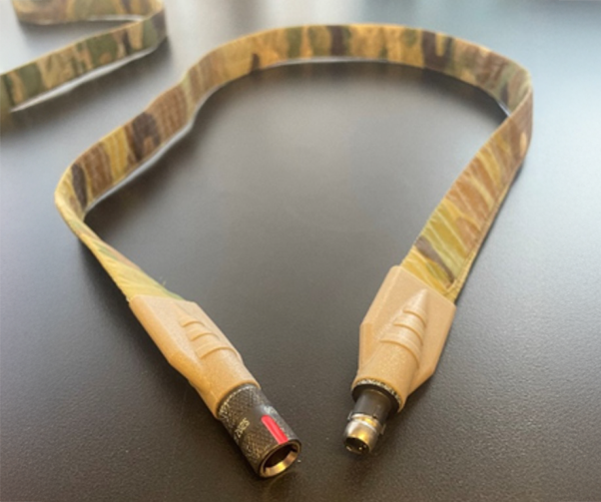
CROW provides fast, deployable electronic warfare with accelerated signal processing, machine‑learning insights, and agile mission support.
MORE INFORMATIONARVA
Lorem ipsum dolor sit amet, consectetur adipiscing elit, sed do eiusmod tempor incididunt ut labore et dolore magna aliqua. Ut enim ad minim veniam, quis.
MORE INFORMATIONGET IN TOUCH
WE TAKE IT ON

When the mission demands a partner who understands the platform, the pace, and the responsibility—DCS is ready, and more often than not, we are already there. Connect with our team to discuss your challenges, explore partnering opportunities, or learn how DCS delivers trusted solutions. Reach out today and let’s take it on together.
START A CONVERSATION